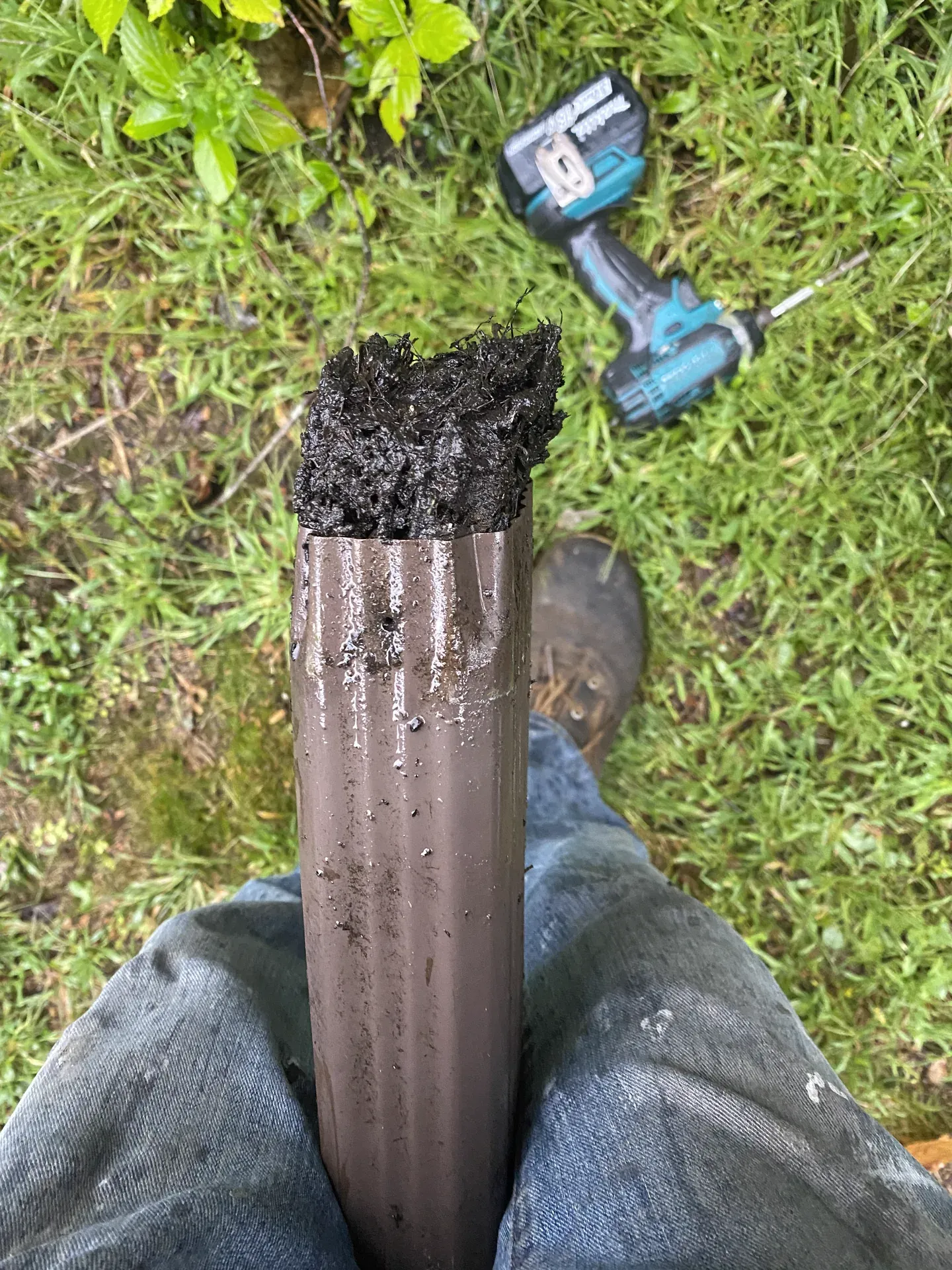
There are several common causes. First, the gutter pitch might be incorrect. Gutters require a slight slope toward the downspout; if too flat, water can sit and pool; if too steep, water may rush past the outlet unevenly. Second, the system might be undersized for the roof area it serves. The volume of water the gutters can handle depends on the gutter size, number of downspouts, roof area, and local rainfall intensity. Third, downspout blockages can exist out of sight, such as in elbows or underground drain lines, restricting flow and causing water to back up along the gutters, spilling over seams and corners.