
Roofing Costs · Southern New Hampshire
What Drives Roof Replacement Cost in Southern NH
Roof size, pitch, and material choice drive most of the variation. New Hampshire's snow load and ice dam requirements add the rest. Here is what actually moves the number on your estimate.
Factors Influencing Roof Replacement Costs in New Hampshire
- Costs vary widely by size, material, pitch, and what the crew finds under the old roof.
- New England winters require snow load and ice dam protection that milder climates do not.
- The roofing season runs roughly June through October, which compresses demand into five months.
- Material pricing never fully reset after the 2020 supply disruption.
- The fees buried in the fine print are where two quotes for the same roof diverge most.
What Does a New Roof Really Cost in New Hampshire?
What a homeowner pays depends on variables specific to each house, which is why no single number answers the question honestly. Square footage, material choice, and winter building requirements all stack together on one estimate.
Home size drives much of the variation. New Hampshire's median home measures about 1,934 square feet, which works out to roughly 19.3 roofing squares. A square is the unit contractors use to price labor and material. A larger colonial will always run higher than a smaller ranch, because more squares mean more material and more hours on the roof.
Most of the asphalt residential replacements we handle are finished in a single day. A quote from us in Salem or Derry will generally reflect the same underlying cost drivers, because the way we build an estimate does not change by zip code.
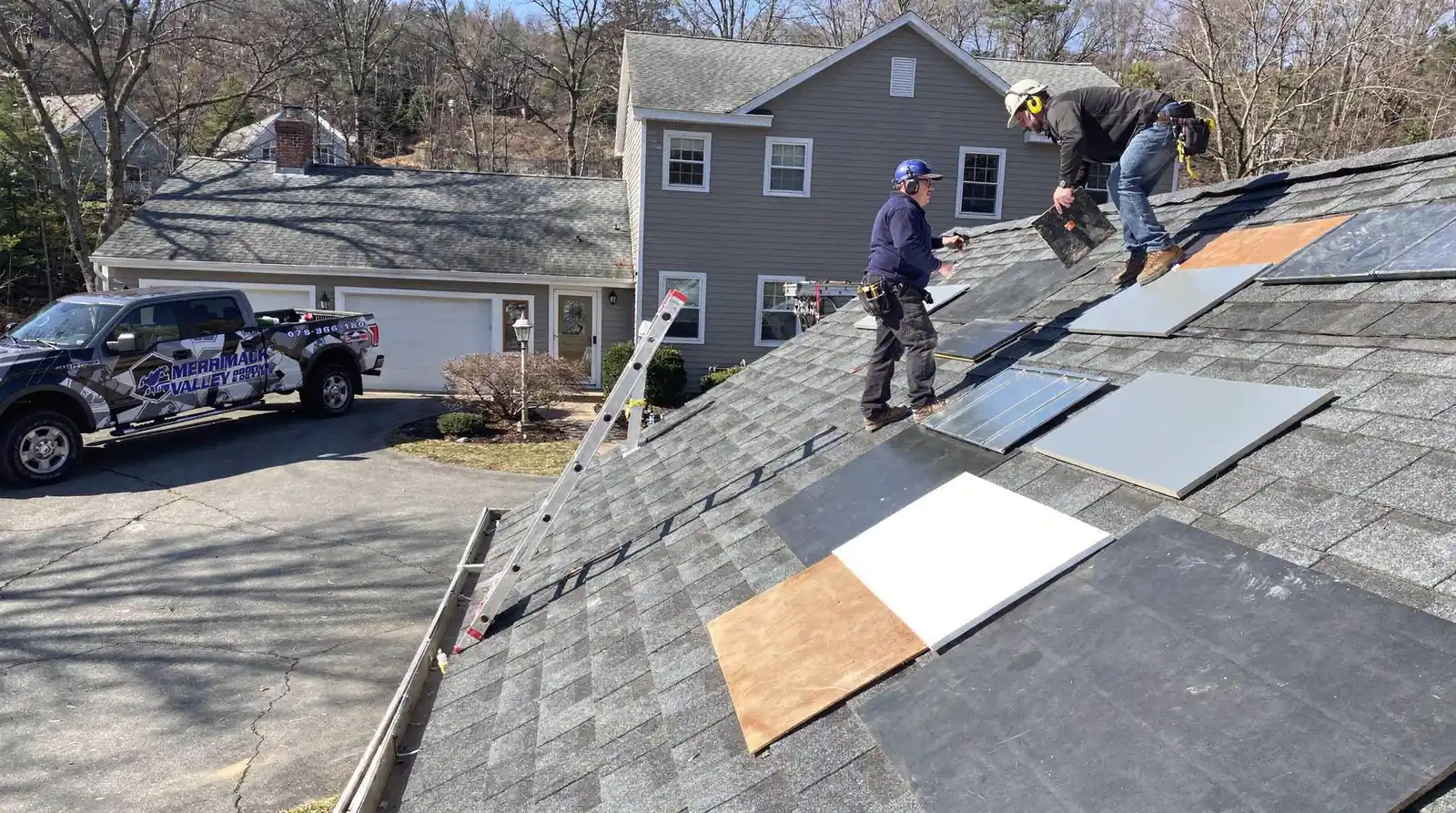
Why do roofing estimates vary so much between contractors?
Winter performance requirements explain most of the gap. New Hampshire's climate demands roofing systems built for heavy snow load, freeze-thaw cycling, and ice dam prevention. A contractor who builds those protections into the job quotes differently from one who leaves them out.
Is a lower quote always the better deal?
Not necessarily. An estimate without ice dam or snow-load provisions looks cheaper on paper and risks expensive repairs after the first hard winter. What the estimate includes matters more than what it totals.
Why Do Roof Estimates Vary So Much in Southern NH?
Material selection drives the widest swings. Asphalt shingles, metal, and slate carry different material and labor demands, and each quote reflects that differently.
Roofing quotes also speak a language most homeowners never learn. Estimates get written in squares and bundles, and that terminology buries real costs inside line items nobody explains. Two estimates covering the same roof can look wildly different simply because one itemizes clearly and the other does not.
What makes up most of a roofing quote?
Labor is the largest single line item on nearly every quote we write. Crew size, tear-off complexity, and how easy the roofline is to reach all factor in before a single shingle goes down. Disposal, permitting, and unexpected deck repair catch people off guard when they show up separately.
We answer this same question every week, whether the homeowner is in Salem or Derry. Access, roof pitch, and site conditions shift pricing even within the same town.
Why do quotes differ across Southern NH towns?
What you pay depends heavily on:
- Roof pitch and square footage
- Number of layers requiring tear-off
- Material chosen for the new roof
- Local permitting and disposal fees
- Crew access and site conditions
Every one of these moves the final number, which is why comparing scope side by side matters more than chasing the lowest total.
Why Are NH Roofs Pricier Than the National Average?
New Hampshire roofing runs above national averages, and three things drive that gap: climate demands, a compressed work season, and a licensing landscape different from neighboring states.
Does New England weather really change the price?
Yes. Winters here demand systems built for heavy snow accumulation and repeated freeze-thaw cycles. Snow load requirements and ice dam prevention add materials and labor that milder climates never require. Those features protect the structure long term, and they raise installed cost against a roof built for a warmer region.
Why does timing affect my quote?
The roofing season runs roughly June through October. That compresses statewide demand into a five-month window instead of spreading it across the year. Crews booked solid through fall price accordingly, and anyone asking for an estimate in peak months should expect less scheduling flexibility.
A third factor sits outside weather and scheduling entirely. New Hampshire has no statewide contractor licensing requirement, while Massachusetts enforces stricter standards. That regulatory gap shapes pricing differently on each side of the border, which is worth knowing when comparing a New Hampshire quote against a Massachusetts one.
We factor all three, climate, season, and market structure, into every estimate we prepare. If you are weighing our numbers against an out-of-state quote, weigh these regional realities rather than assuming a national benchmark applies.
What's Pushing Roofing Costs Higher Right Now?
Material costs and hidden line items explain most of the increase. The roots of that trend run deeper than general inflation.
The story starts in 2020. When COVID hit, lumber and plywood mills scaled back production, betting on a construction slowdown that never arrived. Demand surged instead, and supply could not catch up. Plywood prices more than doubled in some markets during that stretch, and the broader materials market never fully reset.
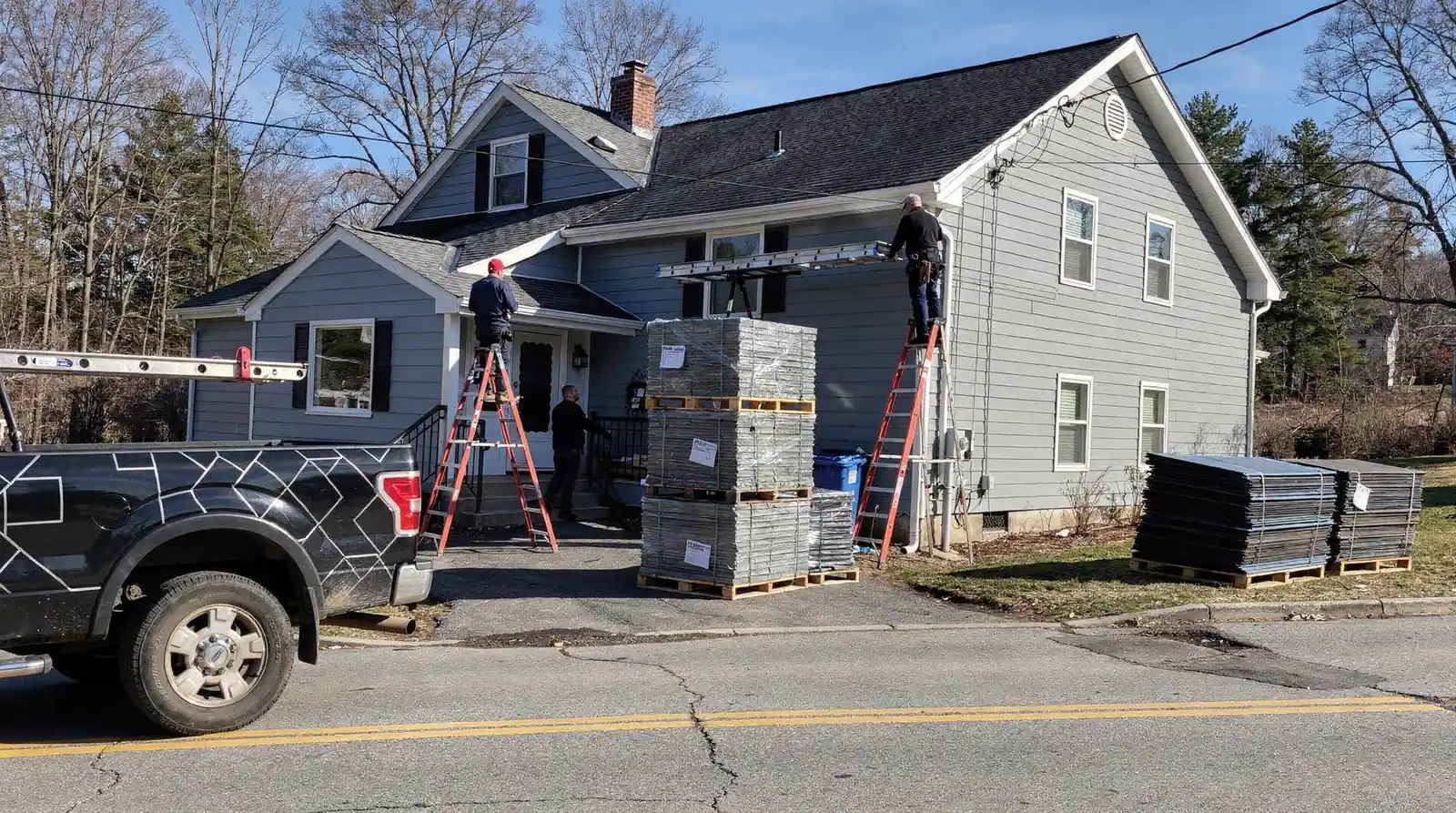
Why hasn't the market settled back down?
Mills adjusted output to a forecast that turned out wrong, and rebuilding production capacity takes years rather than months. We still see material pricing that reflects that lag rather than current demand alone.
What else drives up a quote beyond materials?
Fees buried in the fine print catch people off guard when they compare bids. Ask every contractor to itemize these before signing anything.
- Disposal and dump fees for tear-off debris
- Permit costs, which vary by municipality
- Delivery charges for material staging
- Steep-slope or multi-story access fees
Because these costs shift from property to property and town to town, a quote in Salem will rarely match one in Derry line for line, even on similar homes. We walk through each fee at the estimate, so the number on paper matches the number on the invoice.
How Do Salem and Derry Homeowners Get a Straight Estimate?
Salem and Derry sit inside our Southern New Hampshire service area, alongside Sandown, Hampstead, Plaistow, Atkinson, Windham, Londonderry, Hudson, Pelham, Manchester, Nashua, Exeter, and Portsmouth. See the full service areas list.
Homeowners across the region consistently point to reaching the owner directly during the estimate as the reason the numbers hold up. The person quoting the job is the person who owns the pricing decision, which is why the number on the estimate is the number on the invoice.
What should a straight roofing estimate include?
A solid estimate comes down to who delivers it, what it includes, and how fast it arrives. We build every one around the same standards, regardless of zip code.
- A foreman who walks the roof before writing a number
- Financing terms sorted at the estimate rather than after
- 24-hour response for roof leaks and storm damage, so timelines stay predictable
There is a longer checklist of what to read before signing with anyone in our roofing contract checklist.
Does the estimate change based on financing needs?
Financing does not change the underlying pricing. Terms get sorted at the estimate itself, so you see the project cost first and the payment structure second. Separating the two keeps the comparison between contractors fair.
Common Questions
What is the average cost of a roof replacement in Southern NH?
It varies by roof size, material, pitch, and site conditions, which is why we quote on site rather than publishing a figure. Most asphalt residential replacements we handle are finished in a single day. Book a free inspection and you will get a written number for your specific roof.
Why do roof replacement quotes vary so much between contractors?
Roof size, material selection, and winter-driven requirements like snow load and ice dam prevention. Contractors who build those protections into their pricing quote differently from those who skip them, which creates wide gaps between bids on the same house.
Is choosing the lowest roof replacement quote a smart move?
Not necessarily. A lower quote missing ice dam or snow-load provisions looks cheaper upfront and risks costly repairs after the first hard winter. Compare what each estimate actually includes rather than the total alone.
Why does the roofing season matter for pricing?
The season runs roughly June through October, so statewide demand compresses into five months. Crews booked through fall have less scheduling flexibility. Winter work is possible, and asphalt shingles need hand-sealing in the right spots when it is cold, which a crew that works through New England winters will know how to handle.
What happens if you find rotten decking after tear-off?
We call you before we replace it. Deck condition is the one thing nobody can fully see until the old roof is off, so it gets flagged at the estimate as a possibility and confirmed in person if it turns up. It does not get added silently to the invoice.
Get a Written Number for Your Roof
A foreman comes out, walks the roof, and leaves you with an estimate in writing. Free visit, no obligation.